Phoenix Retail Market Remains Tight Despite Pressure on Smaller Tenants
PHOENIX, AZ (Sept. 4, 2026) — Phoenix continues to rank among the nation’s strongest retail markets in 2026, with robust absorption, sustained rent growth and historically low vacancy, according to Marcus & Millichap’s third-quarter Phoenix Retail Market Report.
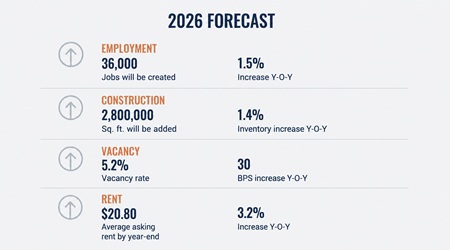
The brokerage forecasts 36,000 new jobs for the metro in 2026, representing 1.5 percent year-over-year employment growth. Phoenix had already added about 23,000 jobs through June, ranking fourth among major U.S. markets for net hiring gains. Health care and social assistance accounted for roughly 10,000 of those positions, while professional and business services added about 8,300. The rebound follows net job losses in 2025 and could support consumer spending through year-end.
Retail construction remains elevated, with approximately 2.8 million square feet expected to be added this year, increasing inventory by 1.4 percent. Phoenix is expected to post the second-fastest retail supply growth in the country, behind only Austin. However, nearly 90 percent of the incoming space is already committed, limiting the impact on vacancy. Much of the development is concentrated in outer suburbs, including nearly 1 million square feet at Verrado Marketplace and Buckeye Commons.
Marcus & Millichap expects metro vacancy to finish 2026 at 5.2 percent, up 30 basis points from a year earlier. Even with that increase, vacancy remains well below historical norms. Phoenix recorded about 1.1 million square feet of net absorption during the first half of 2026, the highest level among major U.S. markets. Year-end vacancy is projected to remain roughly 110 basis points below the metro’s 10-year average.
Performance varies significantly by property size. Vacancy at retail properties larger than 20,000 square feet fell approximately 30 basis points year-over-year to about 5 percent in June, while vacancy at smaller buildings rose roughly 60 basis points to nearly 4 percent. Marcus & Millichap attributes the weakness in smaller spaces partly to pressure on thin-margin tenants, particularly restaurants and fast-food operators that are sensitive to shifts in discretionary spending.
Average asking rents are forecast to rise 3.2 percent in 2026 to $20.80 per square foot. By year-end, Phoenix retail rents are expected to stand approximately 30 percent above 2019 levels, compared with a 20 percent increase nationally. Newer retail properties have performed particularly well, with vacancy below 3 percent in post-2000 inventory and small pads leased to national tenants commanding rents near $60 per square foot.
On the investment side, sales activity rebounded during the second quarter following a slower start to the year, led largely by private investors targeting triple-net properties. Deal volume remains below the peaks of 2021 and 2022 but is generally in line with pre-pandemic levels. Marcus & Millichap highlights affluent East Valley and North Phoenix trade areas, newer assets in West Valley growth corridors, Bell Road in Northwest Phoenix and retail near improved Interstate 10 access through Chandler as areas likely to attract continued investor interest.
The overall picture is one of a resilient Phoenix retail market: new supply is being absorbed, rents are rising and vacancy remains historically tight, although smaller shop-space tenants face greater pressure as consumer spending becomes a more important variable through the remainder of 2026.
Read full report here: Phoenix Retail