Slower Construction Supports Multifamily Outlook as Higher Rates Complicate Sales
 (November 5, 2026) — Marcus & Millichap is reporting apartment concessions are easing and housing construction is slowing, creating a more favorable supply and demand balance for multifamily owners. Higher borrowing costs, however, could complicate transactions as buyers and sellers adjust their pricing expectations.
U.S. employers added 152,000 jobs in the third quarter, down from 242,000 in the previous quarter. Despite slower hiring, renters absorbed more than 56,000 apartments during the period.
Sun Belt markets continued to record some of the strongest absorption relative to existing inventory. In Austin, Jacksonville and Tampa, upcoming deliveries are becoming more manageable relative to recent demand, potentially supporting lower vacancy and improved property performance heading into 2027.
The share of apartments offering incentives nationally declined from a post-pandemic peak of 17% in May to 14.5% in September. Class C properties recorded the largest reduction, although the segment still had the highest concession rate at 18.1%. Further declines are possible as new supply eases, but properties taking longer to fill vacancies may continue to offer incentives.
Construction slowdown could extend beyond 2027
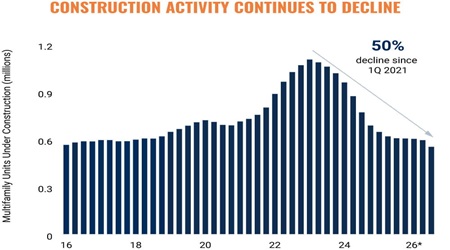
Approximately 550,000 multifamily units were under construction in the third quarter, the lowest total in more than a decade. Single-family construction also slowed, with the seasonally adjusted annual pace of housing starts falling to a one-year low in September.
Softer buyer demand and rising development costs are limiting prospects for a near-term rebound. In October, 43% of homebuilders reported cutting prices, up from 38% in September. Meanwhile, the construction cost index increased for the tenth consecutive month in September.
Labor shortages are adding pressure, particularly as data center projects compete for construction workers. These conditions leave builders with less room to reduce prices while keeping projects financially feasible.
The slowdown may persist beyond 2027. Combined single-family and multifamily permitting declined 3.2% from a year earlier in September on a seasonally adjusted basis, pointing to continued restraint in future housing supply.
Higher financing costs complicate pricing
Preliminary data show multifamily transaction activity reached its second-highest level in four years during the third quarter. Declining construction should support property fundamentals and investor interest across many markets, but higher interest rates could temper that momentum.
The 10-year U.S. Treasury yield stood at 4.94% on November 2, while the 30-year mortgage rate was 7.24% on October 29.
Higher financing costs limit the debt buyers can support and may widen the gap between their offers and sellers’ expectations. Even where vacancy is tightening and rent growth prospects are improving, some sellers may need to accept lower valuations to complete a transaction.
Over time, stronger property cash flows could help offset financing pressures and bring buyer and seller expectations closer together. For now, the multifamily market faces competing forces: less construction is improving the operating outlook, while borrowing costs continue to challenge deal economics.
Source: Marcus & Millichap Research Services, drawing on data from Freddie Mac, Moody’s, the Mortgage Bankers Association, the National Association of Home Builders, the National Association of Realtors, RealPage, the U.S. Bureau of Economic Analysis and the U.S. Census Bureau.