Teen Challenge Expansion Signals Continued Effort to Revitalize Tucson’s Miracle Mile Corridor
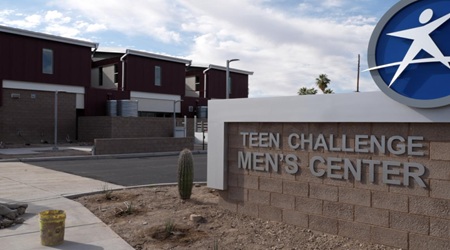
TUCSON, AZ (May 5, 2026) — A newly opened residential recovery facility along North Oracle Road at 136 W Miracle Mile, Tucson, AZ 85705, is adding momentum to ongoing efforts to reposition one of Tucson’s most historically challenged commercial corridors.
Teen Challenge of Arizona held a ribbon-cutting on May 1 for its new Tucson Men’s Center, located along the Miracle Mile stretch of Oracle Road. The project converts a former motel property into a structured, faith-based residential program designed to serve men recovering from substance abuse and other life-controlling issues.
The opening represents more than a program expansion. It reflects a broader, incremental shift underway along Miracle Mile—an area long associated with aging motels, transient uses, and underinvestment, but increasingly targeted for reinvestment, adaptive reuse, and public-private coordination.
The Teen Challenge facility is part of a wider trend of repurposing older hospitality assets into housing, treatment, and service-oriented uses. In this case, the property has been repositioned to provide long-term residential recovery, typically spanning 12 months or more, with an emphasis on life skills, employment readiness, and community reintegration.
Local stakeholders have identified the Miracle Mile corridor as a key infill opportunity given its proximity to downtown, access to major transportation routes, and existing building stock suitable for adaptive reuse. Over the past several years, the corridor has seen a mix of public safety initiatives, code enforcement efforts, and targeted redevelopment activity aimed at stabilizing the area.
While not a traditional commercial real estate project in the retail or industrial sense, the Teen Challenge development plays a role in the corridor’s evolving ecosystem. By converting a formerly distressed property into a managed residential program, the project contributes to reduced vacancy, improved site control, and a more consistent use pattern—factors often cited as prerequisites for broader private investment.
The Miracle Mile area remains in transition. Challenges related to aging infrastructure, land-use compatibility, and long-term investment viability continue to shape its trajectory. However, projects like Teen Challenge’s Tucson center illustrate how non-traditional users—particularly those focused on housing and recovery—are becoming part of the corridor’s repositioning strategy.
As Tucson continues to evaluate infill redevelopment and adaptive reuse opportunities, the Oracle Road/Miracle Mile corridor stands as a case study in how incremental change, rather than large-scale redevelopment, is shaping the next phase of urban investment.