Thunder, Newest Salt River Foal, Represents the Herd’s Next Generation
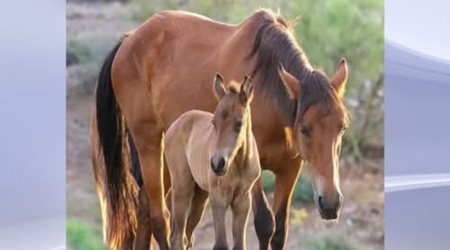
SALT RIVER, AZ (Sept. 4, 2026) — Born on August 15 to Minnie and Light Rain, this beautiful Salt River foal is only a few weeks old, but in many ways, Thunder represents something much bigger: the next generation of the Salt River wild horses.
His birth came just days before a major change in the future of the herd.
On August 18, Gov. Katie Hobbs announced that removals of Salt River horses for adoption outside the management area would be suspended for 2026 and 2027, creating time for a genetic viability study to be completed before additional removal decisions are made. Hobbs said the study is intended to help ensure that the herd remains genetically stable and healthy for generations to come.
Then, on August 27, the Arizona Board of Regents approved a $325,000 Regents’ Research Grant for Northern Arizona University and the University of Arizona to conduct the two-year study. Researchers will use noninvasive DNA sampling and genomic analysis to examine the herd’s genetic makeup, inbreeding levels and population viability.
The Governor and ABOR formally announced the study together on August 31. Researchers from NAU and the University of Arizona will work with federal wild horse experts from the U.S. Geological Survey, with the resulting data intended to help inform future Arizona Department of Agriculture management decisions.
That makes Thunder’s arrival especially timely.
Thunder is one of those generations and carries forward a genetic legacy spanning more than two centuries and roughly 25 generations of Salt River horses.
The decisions being made today are ultimately about whether foals like Thunder, and the generations that follow him, will inherit a healthy, genetically diverse and sustainable herd.
Thunder is also one of the Hill horses, whose bands spend much of their time away from the river corridor. That gives us reason for additional hope. Predators that have taken foals from the herd are more frequently seen hunting along the river, so we are hopeful his life in the hills will give this little colt an extra measure of protection as he grows.
Thunder’s coloring may change dramatically as he grows. He appears likely to carry the gray gene seen in many Salt River horses, which can cause foals born with darker coats to progressively lighten with age, eventually becoming gray or nearly white.
Every foal born to this herd carries forward a genetic legacy from horses that have survived on this landscape for generations, with documented history tracing the Salt River horses back to at least 1790.
Now, rather than relying solely on assumptions about what population level the herd can sustain genetically, Arizona will have new research examining the horses themselves and the genetic diversity they carry.
And while the scientists begin that important work, Thunder is already giving us a glimpse of what is at stake.
The future of the Salt River wild horses has four little hooves, a wild family beside him and a name that suits him perfectly.
Welcome to the world, baby Thunder. May you grow strong, stay wild and one day help carry this remarkable herd into another generation.