Tucson Median Rent Hold Steady in July, Down 3.6% Year-Over-Year
TUCSON, AZ (July 2, 2025) — According to the Apartment List July 2025 Rent Report, Tucson median rents currently stand at $1,062, showing little change from the previous month. On a year-over-year basis, rents are down 3.6%, reflecting a continued softening in the local rental market.
Read on for a closer look at how Tucson’s rental trends compare to broader national patterns.
Tucson Rental Stats
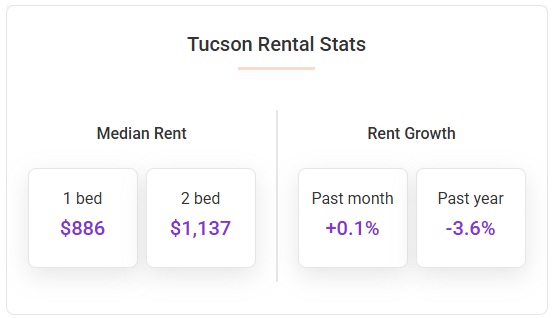
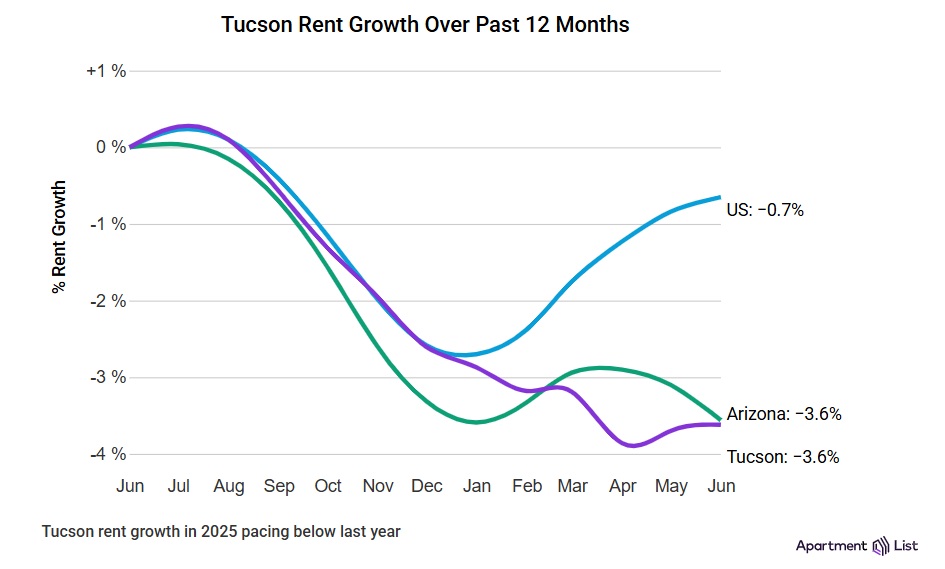
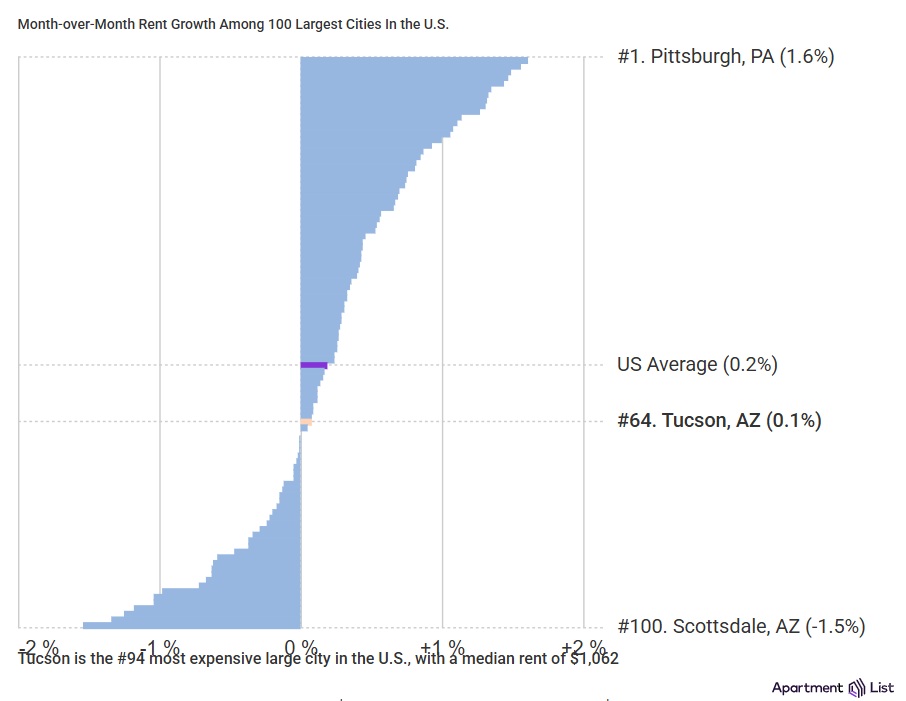
The median rent in Tucson rose by 0.1% in June and has now decreased by a total of 3.6% over the past 12 months. Tucson’s rent growth over the past year is similar to the state average (-3.6%) but has fallen below the national average (-0.7%).
 Six months into the year, rents in Tucson have fallen 0.8%. This is a slower rate of growth compared to what the city was experiencing at this point last year: from January to June 2024 rents had increased 0.7%.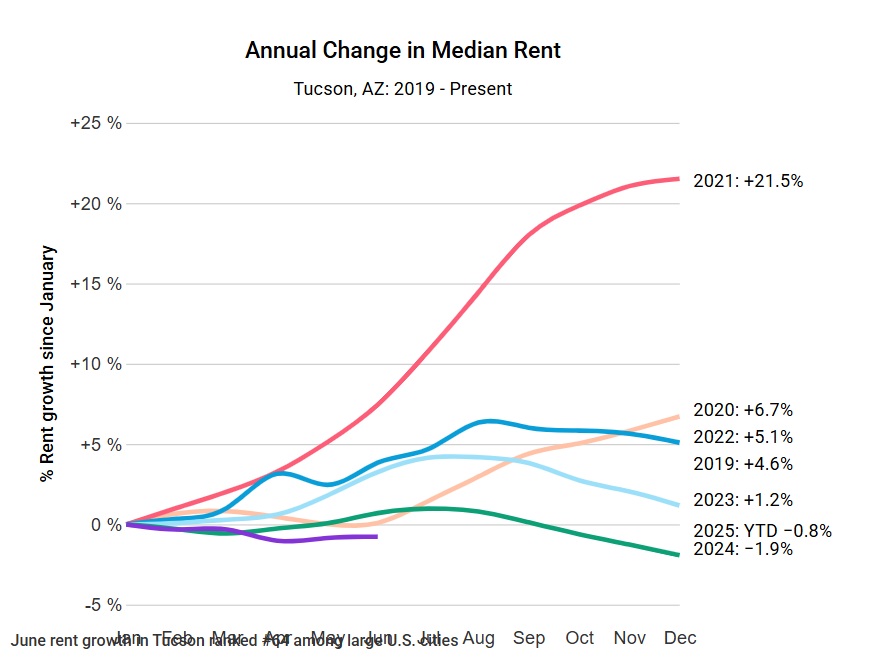
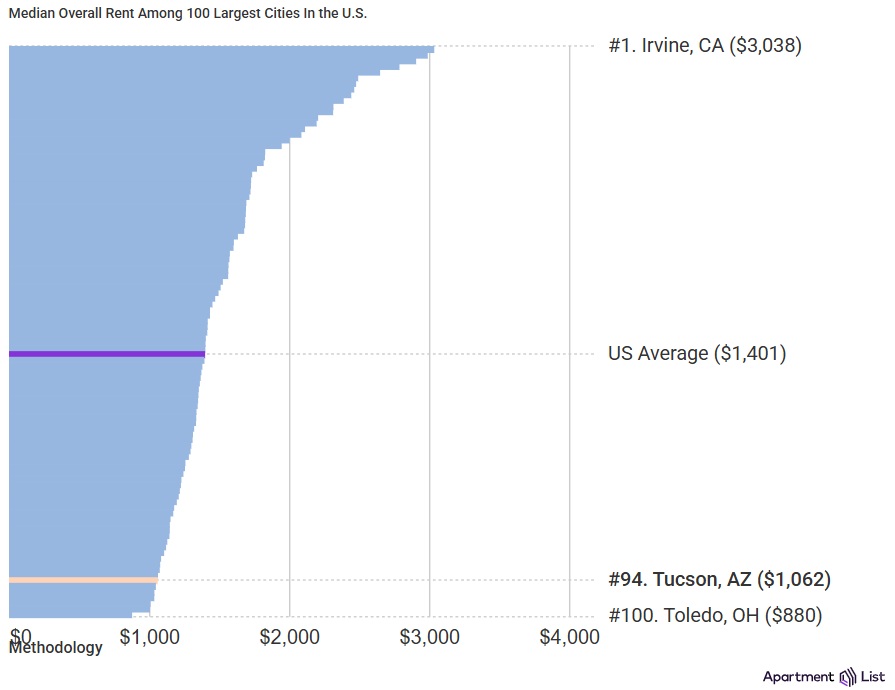
Citywide, the median rent currently stands at $886 for a one-bedroom apartment and $1,137 for a two-bedroom apartment. Across all bedroom sizes (ie, the entire rental market), the median rent is $1,062. That ranks #94 among the country’s 100 largest cities.
For comparison, the median rent nationwide is $1,231 for a 1-bedroom unit, $1,387 for a 2-bedroom unit, and $1,401 overall. The median rent in Tucson is 24.2% lower than the national average and is similar to the prices found in Detroit, MI ($1,064), and Cleveland, OH ($1,049).
Apartment List is committed to the accuracy and transparency of our rent estimates. We begin with reliable median rent statistics from the Census Bureau, then extrapolate them forward to the current month using a growth rate calculated from our listing data. In doing so, we use a same-unit analysis similar to Case-Shiller’s approach, capturing apartment transactions over time to provide an accurate picture of rent growth in cities across the country. Our approach corrects for the sample bias inherent in other private sources, producing results that are much closer to statistics published by the Census Bureau and HUD. For more details, please see the Apartment List Rent Estimate Methodology.
Apartment List publishes monthly rent reports and underlying data for hundreds of cities across the nation, as well as data aggregated for counties, metros, and states. These data are intended to be a source of reliable information that help renters and policymakers make sound decisions. Insights from our data are covered regularly by journalists across the country. To access the data yourself, please visit our Data Downloads Page.
Source: Apartment List