Tucson Rent Trends: Prices Dip 0.5% Monthly, 4.7% Annually
TUCSON, AZ (February 4, 2026) — The Apartment List February 2026 Tucson Rent Trends is reporting the city’s overall median rent is now $1,018, after falling 0.5% last month. Rents are down 4.7% year-over-year. Below is a snapshot of recent performance in Tucson and how local trends compare with Arizona and the U.S. overall.
Tucson rental stats (February 2026)
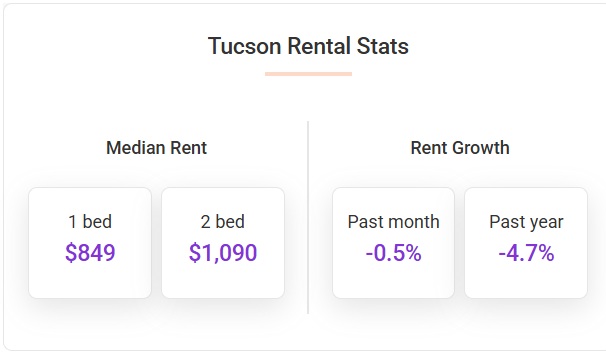
Rents down month-over-month and year-over-year
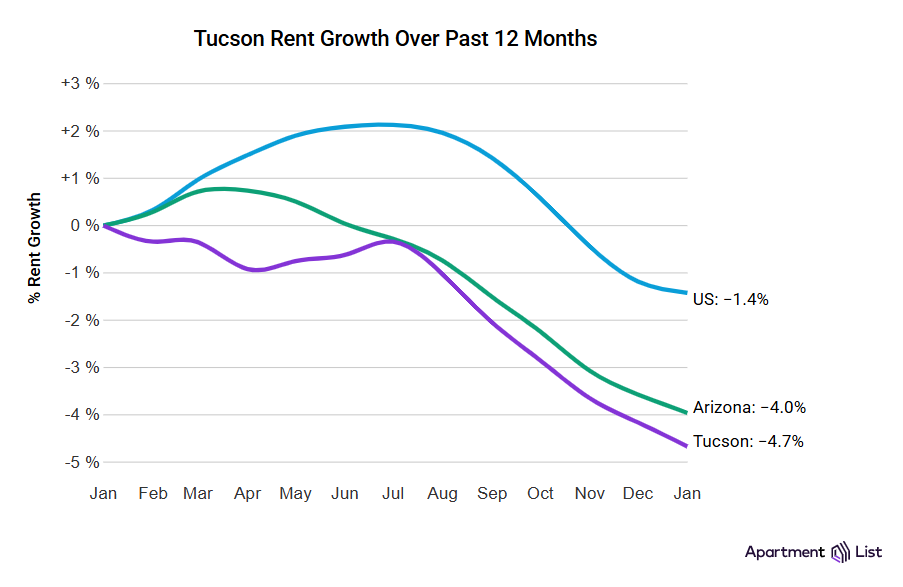
Tucson’s median rent fell 0.5% in January and has now declined 4.7% over the past 12 months. Tucson’s annual rent change is similar to the Arizona average (-4.0%), but has fallen below the national average (-1.4%), reflecting a sharper cooling locally than in much of the country.
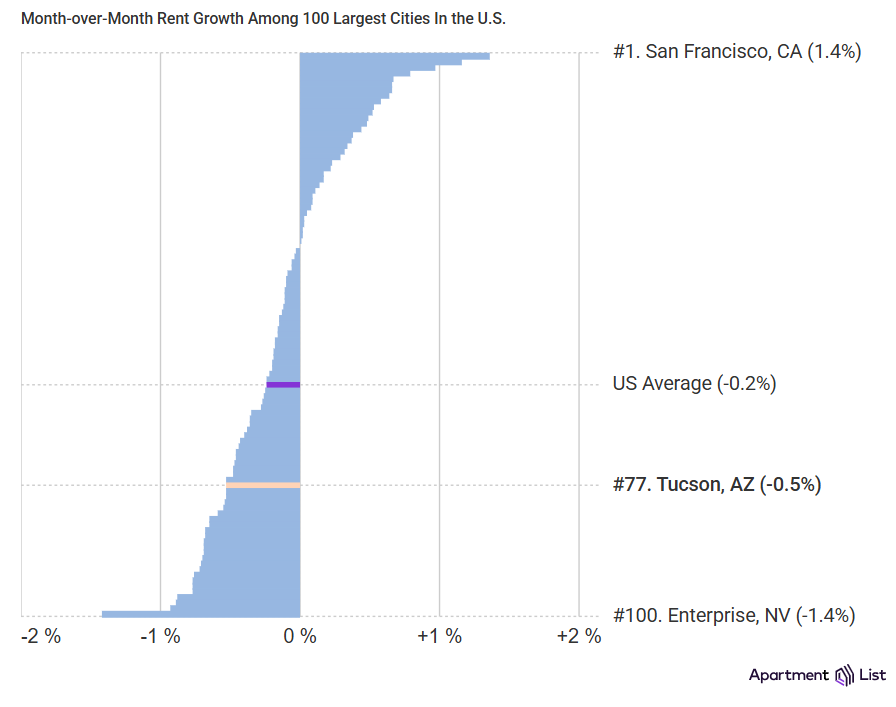
Tucson’s January rent change ranked #77 among large U.S. cities
Tucson rents decreased 0.5% over the past month, compared with a -0.2% decline in the national average across large cities. Among the 100 largest U.S. cities, Tucson ranked #77 for month-over-month rent growth. Cities with similar monthly changes included Tampa, Florida (-0.5%) and Houston, Texas (-0.5%).
Tucson remains among the least expensive large U.S. cities
With an overall median rent of $1,018, Tucson ranks as the #97 most expensive city among the nation’s 100 largest—meaning it sits near the more affordable end of the big-city spectrum.
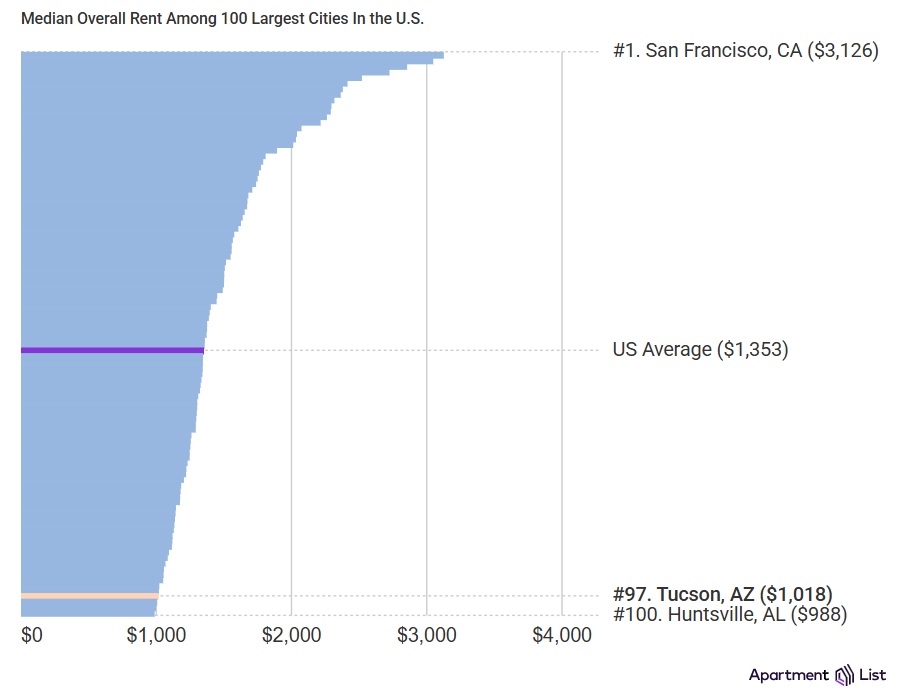
For comparison, the national medians are:
- 1-bedroom: $1,189
- 2-bedroom: $1,339
- Overall: $1,353
Tucson’s overall median rent is 24.8% lower than the national median, and is comparable to markets such as Detroit, Michigan ($1,020) and Wichita, Kansas ($1,007).
Methodology
Apartment List produces monthly rent estimates by starting with median rent statistics from the U.S. Census Bureau, then extrapolating to the current month using a growth rate derived from Apartment List listing data. The methodology uses a same-unit analysis similar to the Case-Shiller approach, tracking rent changes for comparable units over time. Apartment List notes this method helps correct for sample bias present in some private rent sources, with results designed to align more closely with Census Bureau and HUD benchmarks.
Data access
Apartment List publishes monthly rent reports and downloadable datasets for hundreds of cities nationwide, along with aggregated county, metro, and state data. The information is intended to support renters, policymakers, and researchers, and is frequently cited by journalists covering housing markets.