


TUCSON, AZ (October 28, 2025) — Southern Arizona’s longest river is thriving. That’s the message of the 12th annual Living River Report, which offers a detailed look at the stretches of the Santa Cruz River that now flow year-round through Pima County. The collaboration among Pima County Flood Control, Wastewater Reclamation, Conservation Lands & Resources, Tucson Water, and the Sonoran Institute chronicles how life continues to flourish along a once-dry desert channel.
More than 23 miles of the Santa Cruz now carry continuous flow—sustained by high-quality reclaimed water released from the County’s Agua Nueva and Tres Ríos facilities.
“The conditions in the river are stable,” said Eleonora Demaria, chief hydrologist with Pima County Flood Control. “The quality of the water is very high—that hasn’t changed.”
Since major wastewater-treatment upgrades more than a decade ago, researchers have tracked a steady ecological rebound. Over the past year, University of Arizona scientists recorded 41 dragonfly species near Marana, up from 39 in 2023—a clear sign of the river’s improving biodiversity.
The report also highlights the County’s efforts to balance public safety and habitat protection. Before starting flood-safety and restoration work near Twin Peaks Road, biologists relocated 632 reptiles, including Sonoran mud turtles, desert iguanas, and banded geckos, ensuring construction would not harm native species.
Elsewhere, Pima County is redeveloping the former Roger Road Wastewater Reclamation Facility, transforming the 50-acre site into a mix of open space, ecological restoration, and market-driven reuse. An updated Floodplain Management Plan will add new projects to reduce flood risk, restore riparian habitat, and improve river access.
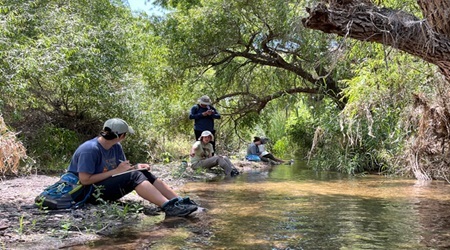
Community stewardship remains central to the river’s revival. Nearly 800 volunteers removed 10 tons of trash from the riverbed in 2024, while local students and educators participated in hands-on science and art programs through the Living River of Words and BIORETS initiatives. The new Santa Cruz River Wildlife Partnership further unites agencies and residents in protecting this shared resource.
From downtown Tucson to Marana, the 2025 report affirms a powerful transformation: the Santa Cruz River is once again a living artery—supporting wildlife, replenishing groundwater, and reconnecting communities across Southern Arizona.
The Living River Report is available in both English and Spanish at the Sonoran Institute’s website.