


(March 3, 2026) -- Taara, the Alphabet/X spinout best known for using invisible light beams to extend connectivity where fiber is hard to build, just introduced a major redesign that could matter to data centers, campuses, industrial parks, and dense urban rooftops, the places CRE owners and operators increasingly get pulled into as bandwidth becomes a site-selection issue.
The company’s headline move is the Taara Photonics Platform, which shrinks key functions of a high-speed wireless optical link into a silicon-based photonic module roughly the size of a finger. Instead of steering a beam with mechanical components, the new platform uses a solid-state optical phased array with 1,000+ miniature emitters to shape and steer light electronically, no moving parts, and a roadmap that Taara says can improve generation-to-generation like other silicon platforms.
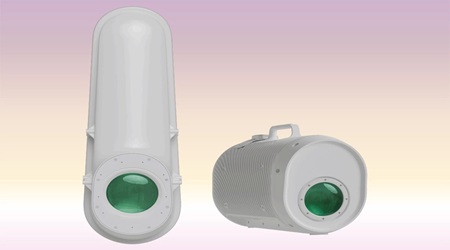
Built on that platform, Taara’s first product is Taara Beam: a shoebox-sized unit designed to mount on rooftops, poles, or existing structures to create line-of-sight links up to 10 kilometers (6.2 miles), delivering up to 25 Gbps bidirectional throughput with ultra-low latency, without trenching streets, pulling permits for right-of-way, or licensing radio spectrum.
For CRE readers, the practical angle is speed-to-connect. Fiber is still the long-term backbone, but in many real projects the schedule bottleneck is civil work: design review, permits, utility conflicts, and construction windows. Taara’s pitch is that a building-to-building or campus-to-campus backhaul link can be stood up in hours if you have clear sightlines useful for:
- Data center clusters that need fast interconnects across nearby parcels
- Enterprise and healthcare campuses adding capacity between buildings
- Industrial and logistics sites where trenching is disruptive or slow
- Event venues and temporary projects that can’t wait for a fiber buildout
Taara is not new to the category: its earlier Lightbridge systems are already deployed in 20+ countries with major telecom partners, and the company positions Beam as the next step for denser, more flexible networks closer to the edge.
One caveat CRE teams should understand: free-space optical links depend on visibility and can be impacted by fog, heavy rain, or smoke, so reliability planning matters (route diversity, redundancy, or backup paths).
Taara says Beam will make its industry debut at Mobile World Congress in Barcelona, Spain March 2 – March 5, 2026, with CEO Mahesh Krishnaswamy scheduled to appear in the event programming.