Tucson’s Q3 Retail Market Report: Small-Shop Scarcity vs. Big-Box Availability
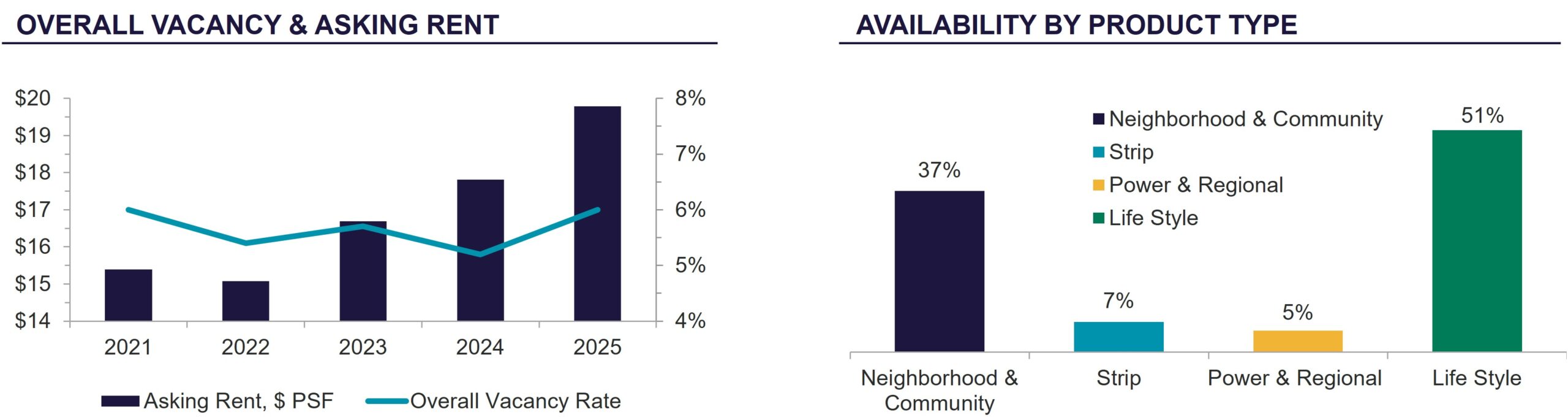
TUCSON, AZ (December 4, 2025) — In Q3, Tucson’s retail market remained balanced amid cautious optimism, with vacancy rising slightly to 6.0% due to larger store closures. Tucson’s retail sector was defined by steady fundamentals, targeted expansion in niche segments, and cautious upward pressure on rates.
Smaller-format availabilities under 4,000 square feet (sf) were limited with vacancy at just 2.1%, underscoring few options for shop space operators. Elevated construction costs and interest rates restrained speculative development, keeping new supply muted.
Leasing activity is returning to rebound to pre-pandemic levels, with space demand centered on value, experiential, and fitness-oriented users. Discounters and resale operators were actively backfilling big-box vacancies, while health, wellness, and indoor recreation tenants expanded their footprints.
Infill and adaptive reuse projects gained traction as cost pressures discouraged large ground-up builds. Asking rents climbed 4.8% YOY, reflecting stronger momentum, though average rates still sat below national benchmarks. The affordability of Tucson’s retail space remained advantageous in attracting regional and national tenants. Supply constraints kept vacancy from climbing sharply and rent growth may accelerate if tenant demand persists.
Pricing reflected a market in equilibrium with steady rent growth and stability across most segments. Tucson’s average retail lease rates held near $20 per sf in Q3. Roughly 20% below the U.S. average, but posted annual growth of 4.8%, outpacing national trends. Affluent submarkets such as Foothills and Oro Valley commanded notable premiums due to strong household incomes and luxury retail demand.
Limited new construction and restrained supply applied modest upward pressure on rents, keeping market conditions balanced between landlords and tenants. Large-format may experience downward rate adjustments as vacancy builds, but smaller infills, fitness, and experiential users continued to lease at prevailing rents.
 TUCSON, ARIZONA, March 3, 2023 — The top commercial deals this past week at
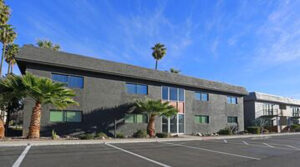
 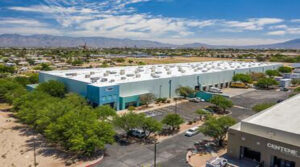 The Beverly on Fifth is located in Central Tucson, making it an ideal location for tenants seeking employment, entertainment, and shopping options. The property is only a few miles away from Carondelet St. Joseph’s hospital, El Dorado Medical Center, and Park Place Mall retail trade area. Additionally, several K-12 schools are located within one mile of the property. With its prime location and range of amenities, the property is highly attractive to a large demographic of tenants such as families, retail staff, and medical professionals.