


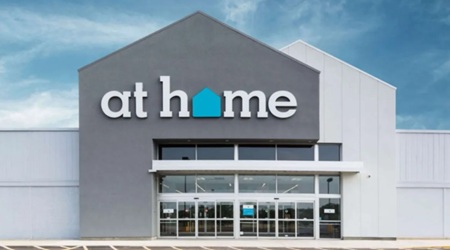
(October 28, 2025) -- At Home Group has completed its restructuring and officially exited Chapter 11 bankruptcy, the home décor retailer announced last week.
Now under the ownership of a group of its lenders, At Home has eliminated nearly all of its $2 billion in funded debt and secured $500 million in new exit financing to support operations and future growth. The company filed for bankruptcy in June, citing the impact of tariffs and consumer uncertainty on its business model.
At Home currently operates 229 stores across 39 states, down from 260 at the time of its filing. Despite the reduced footprint, the company says it is entering a stronger financial position heading into the critical holiday season. This period traditionally accounts for roughly 40 percent of its annual sales.
In a statement, CEO Brad Weston called the emergence “an exciting new beginning” and said the company is focused on regaining relevance with consumers. “We are officially starting our next phase with renewed financial strength, flexibility, and momentum,” Weston said. “We’re taking decisive actions to become more relevant, more inspiring, and more connected to our customers. This new chapter redefines what At Home can be—a brand that helps customers design and create spaces that reflect who they are and how they live.”
The retailer’s new ownership group includes funds affiliated with Redwood Capital Management, Farallon Capital Management, and Anchorage Capital Advisors. Leadership changes accompanied the restructuring, with Weston and Andrew Kilbourne of Redwood Capital joining the company’s board. Additional appointments are expected soon, including John Eck, former CEO of Mattress Firm, and Karen Stuckey, a longtime Walmart executive and current Gildan board member.
While the company’s debt relief provides breathing room, analysts note that At Home still faces headwinds from tariffs that affect much of its merchandise and continued consumer caution around discretionary spending. Nevertheless, the retailer begins its next chapter with a leaner balance sheet and the capital to pursue a focused turnaround.