


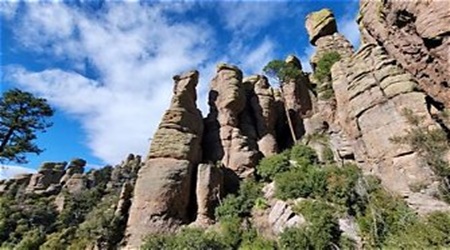
COCHISE COUNTY, Arizona (Oct. 21, 2026) — Southern Arizona officially gained a new national park Tuesday, October 20, when President Donald Trump signed the Chiricahua National Park Act into law, elevating the longtime national monument and its striking rock formations to national park status. The White House confirmed the signing of H.R. 6380 in an announcement Tuesday. (whitehouse.gov)
Chiricahua becomes Arizona’s fourth national park, joining Grand Canyon, Petrified Forest and Saguaro, and the nation’s 64th. The designation brings fresh national attention to southeastern Arizona and a potential boost for the communities that serve its visitors.
Located in Cochise County, the approximately 12,000-acre preserve has been protected as a national monument since 1924. Its transition to national park status follows years of advocacy and bipartisan legislation advanced by Arizona’s congressional delegation. Representatives Juan Ciscomani and Greg Stanton introduced the House measure, while Senators Mark Kelly and Ruben Gallego supported its passage in the Senate.
For nearby communities, the designation offers an opportunity to turn greater recognition into additional overnight stays, restaurant visits and spending at local businesses.
“For Willcox, this designation represents an incredible opportunity,” Mayor Greg Hancock said in an October 1 statement following congressional passage. Hancock said greater awareness could bring additional customers to the community’s hotels, restaurants and small businesses.
The legislation redesignates an existing National Park Service property, keeping its current boundaries and land uses. The immediate change is its designation and the broader visibility that comes with joining the country’s national parks.
Known for its towering rhyolite pinnacles and balanced rocks, Chiricahua preserves a landscape shaped by volcanic forces and erosion. Visitors can explore an eight-mile scenic drive to Massai Point and approximately 17 miles of hiking trails, with routes ranging from easy walks to strenuous hikes through the rock formations. Camping and dark skies add to its appeal as a destination for longer visits.
The landscape also holds a cultural history encompassing Indigenous peoples, Apache communities, Buffalo Soldiers, ranchers and the Civilian Conservation Corps. The legislation includes protections for traditional cultural and religious sites and continued Tribal access for traditional cultural and customary uses.
Greater recognition also brings practical questions about readiness. Conservation organizations supporting the designation have emphasized the need for adequate staffing, maintenance and visitor services as Chiricahua’s national profile grows.
For southeastern Arizona’s hospitality and business community, the opportunity will depend on converting that attention into visits and longer stays. Coordinated marketing, visitor services and connections to surrounding attractions could help communities throughout Cochise County share in the benefits of Arizona’s newest national park.