


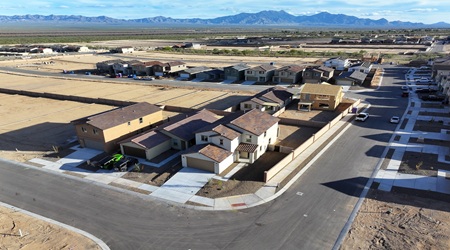
TUCSON, AZ (February 23, 2026) -- Residential development is never just about rooftops, and this month's Trend Report has the details. It is about timing, trust, and the math that determines whether a project pencils, a community thrives, and a region holds its momentum.
This issue follows the real-world sequence of decisions made across Southern Arizona—from vision to feasibility to policy to costs to leadership, and then to what comes next. In today’s environment, progress rarely turns on a single dramatic event. More often, it comes down to details: financing terms, review timelines, infrastructure coordination, product design, and a shared understanding of the rules.
We begin with the people building places. Master planned communities like Rancho Sahuarita and Dove Mountain show what durable development looks like when it is built over decades, not quarters. They reflect long-range commitments to infrastructure, amenities, and identity, and they deliver a consistent promise of place.
The next chapter will not be a simple repeat of the last one. A visible shift is underway in how land is positioned and how projects are described. The old pitch of entitlements, lots, and velocity is being supplemented by a new language of walkability, authenticity, lifestyle, health, and local production. Whether you call it farm-to-table, placemaking, or a response to buyer demand, people want neighborhoods that feel rooted here, connected to local culture, and built with intention.
Then comes the reality check every buyer, builder, broker, and lender is living under: mortgage rates. Rates don’t just affect affordability; they affect behavior. They influence whether a move-up buyer lists a home or stays put, whether a developer advances the next phase or slows the pace, and which products get built. When the cost of money rises, the margin for error shrinks—and execution matters more.
From there, we turn to policy, because policy is where intent meets consequence. Middle housing, casitas, and ADUs are tools. Done well, they expand options and increase attainable supply without erasing neighborhood character. Done poorly, they create confusion, inconsistent enforcement, and delays that add cost. This is where definitions matter—and so do standards and process.
Next comes valuation and taxes. Property taxes are a cost structure. They influence rents, investment returns, redevelopment choices, and household budgets. In a growing region, valuation becomes both a planning and a feasibility issue.
We then ask the question readers always want answered: Who is delivering? That is where performance benchmarks and industry scorecards belong, including SAHBA’s perspective on what is working, what is slowing production, and where process improvements can unlock more attainable housing.
A quick pivot to proof through market data, deals, and momentum. After all the narratives and debates, the market still speaks in closings, absorption, and performance.
We then widen the lens to capital and strategy. The Asset Elevator and CRE’s Next Phase May Be Closer Than It Feels point to the truth many practitioners recognize: markets shift quietly before they shift loudly. Repositioning, recapitalization, and timing are daily conversations for owners, lenders, and brokers preparing for the next turn of the cycle.
Infrastructure belongs in the same conversation. Transportation decisions shape the feasibility of infill and new community growth. MAP Talk: Moving Tucson Forward provides structure to the debate around RTA Next and is a reminder that mobility is a foundational input for housing, jobs, and economic development.
We take a short step back beyond real estate with The State of American Business 2026 and the Pro-Growth Playbook from the US Chamber. Development does not happen in isolation. It responds to confidence, regulation, labor realities, and whether employers feel empowered to invest.
We also recognize the people carrying the work forward: CREW Tucson’s new 2026 board leadership and the CCIM 34th Annual Commercial Real Estate Forecast, as told by George Larsen.
We close with the Subdivision Watch List. Knowing what is under construction, what is launching next, and where the next wave of product is coming online is actionable for brokers, lenders, investors, and households watching affordability.
In a market that can feel noisy and uncertain, the takeaway is simple: the devil is always in the details, and the people who track them best are the ones best positioned to lead. Thanks to everyone who helped and contributed to this issue.
Looking ahead, do not miss our April issue on Retail Trends. As always, we welcome your feedback and contributions. Visit TrendReportAZ.com and click Connect to get in touch.
Karen Schutte
Managing Editor, TREND Report