


 By Craig J. Cantoni
TUCSON, AZ (July 10, 2026) -- The July 9th edition of the Wall Street Journal had a story set in Tucson.
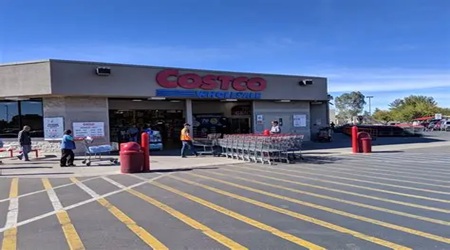
The 1,570-word story featured a long-tenured Costco employee who works on the checkout line at a Costco store in Tucson — specifically, the store I patronize on Grant Road, just west of Tanque Verde Road. The employee earns nearly $33 an hour and has accumulated more than $1 million in his 401(k).
He is an example of the benefits of working for Costco, a company with a management philosophy of treating employees well, which in turn results in them treating customers well—which in turn makes the company successful.
This isn’t as unusual in America as the popular anti-business narrative suggests. I worked for two manufacturing companies that had the same philosophy, which is why I worked for them. Factory workers retired as millionaires.
Both companies were privately-held, family-owned businesses. One of them was the global giant Mars, Inc.
I worked at the headquarters of its US confectionery business in New Jersey. As was Mars’ custom, the office was connected to a plant, so that white-collar managers and employees never forgot what made the company successful.
When one of the two billionaire brothers who ran the far-flung operation would come to town, the first thing he would do was go into the plant and talk with longtime employees he knew personally, asking how they were doing and how they were being treated.
The owners were also fastidious about cleanliness, upkeep, and being good neighbors. The lawn and landscaping in front of the plant looked like a putting green on a championship golf course.
Judging by how the Mars brothers dressed, the mid-priced rental cars they drove, and the mid-tier hotels they stayed at, you wouldn’t know they were billionaires.
On a related note, when I was at the Grant Rd. Costco a few weeks ago, the CEO of the company was at the store. He was unpretentious, affable, and clearly well-liked by employees. Standing in the check-out area, he was applauding employees for their service with the company.
A cautionary note: Treating employees well and paying them well is a surefire way of going out of business unless there is a commensurate level of productivity, efficiency,
and quality. Accomplishing both requires not only investments in people but also investments in maintenance and state-of-the-art technology and equipment. Other essential prerequisites are high expectations and a low tolerance for mediocrity.
This prescription for success applies to nations as well. Unfortunately, the second part of the formula is overlooked by those who believe that a higher minimum wage and/or socialism alone will magically remedy America’s socioeconomic problems.
Masochists who regularly read my essays know that I’m fixated on aesthetics and upkeep. That’s because, as I have learned repeatedly, how a place looks is an indicator of how it is managed. This is true for both businesses and cities.
If, for example, a restaurant doesn’t have enough pride to keep its parking lot and frontage nicely landscaped and maintained, there’s a high probability that its kitchen isn’t clean. And if litter and weeds are in abundance outside of a retail store, there’s a high probability that the place will be badly managed and staffed with surly employees.
Unsurprisingly, the Costco parking lot is spotless. So are the loading docks in the rear of the store.
The same holds for a city. There’s a high likelihood that a city is badly governed if streets aren’t nicely landscaped and paved, if litter isn’t picked up, if illegal signage is allowed to proliferate, if property maintenance codes aren’t enforced, and if seediness and shabbiness are widespread.
By those indicators, Tucson and Pima County do not need another slogan, task force, or vision statement. They need basic management discipline.
_______________________________________
Mr. Cantoni is a freelance writer, author of a management book, former business executive, and advocate for public policy reform. He later founded a management consultancy whose clients included Houston-based Weingarten Realty Investors. He now lives in Tucson.